Your banking stack is a workflow, not a brochure
Malaysian SME owners often shop for business banking the way they shop for phones: browse the flashiest portal, screenshot a card offer, then ask a friend which bank “everyone uses.” That order is backwards. Cash tools, cards, and current accounts only make sense once you know how money enters, waits, and leaves your company each week.
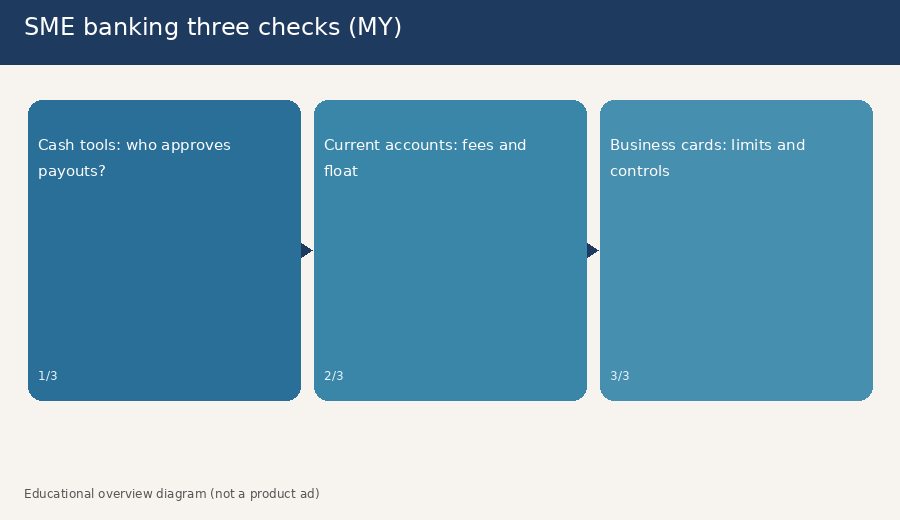
One sheet, three lanes. Answer your own questions before you argue with a salesperson.
Cash tools only earn their keep when approvals are clear
Digital cash management is not a logo on a login screen. It is who can raise a payment, who must approve it, how fast balances refresh, and whether your accountant can export a clean audit trail at month end. If two partners both need to sign supplier transfers, a pretty dashboard that only supports single approval will slow you down every Friday.
Write your weekly jobs first: payroll, supplier runs, customer collections, and any trade or foreign-currency steps. Then test whether a portal can mirror that rhythm. Public hubs that describe platforms such as Alliance BizSmart are useful catalogues for feature lists. Treat them like a menu, not a verdict.
Also ask boring operational questions. Can you set maker-checker roles without calling the branch every time a staff member leaves? Do batch payments leave a reference you can reconcile in your books? Is mobile access secure enough for travel days without opening the whole company to risk? Cash tools that fail these checks become expensive toys.
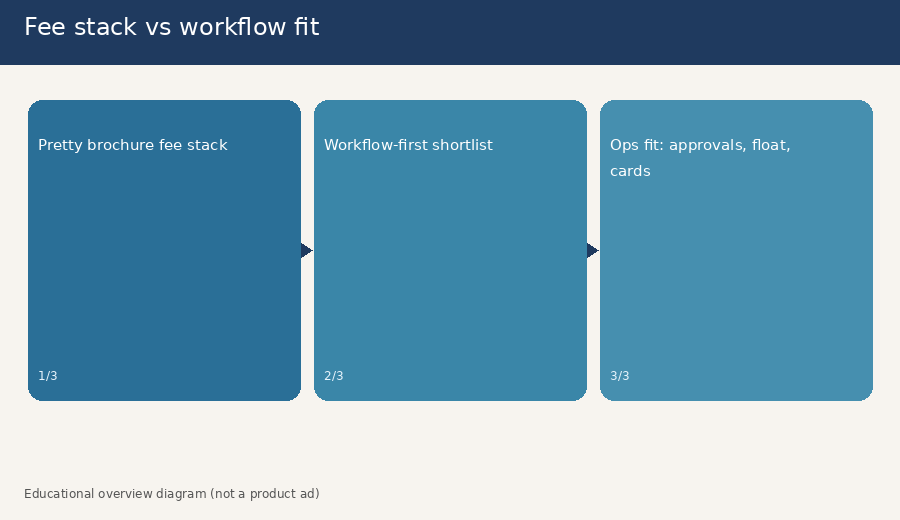
A low headline fee loses quickly if dual approval is clumsy or FX and cheque charges stack up.
The quiet questions about a business current account
A business current account is the spine of SME banking Malaysia setups. Interest is rarely the story. Fees, minimum balances, cheque handling, interbank transfer costs, and how hard it is to add or remove signatories usually matter more. If your float swings wildly across the month, a “cheap” account with a high balance waiver can still sting.
Price the account against your real behaviour, not the brochure table. Count how many outward transfers you actually make. Note whether suppliers insist on cheques. Check what happens when the company name on SSM documents does not match the card you bring to the branch. Public SME current account pages help you scan fee schedules side by side; bring your own transaction diary to the comparison.
Separate personal and business money early. Mixing owner spending with company collections blurs tax records and muddy cash flow. If you need a refresher on why profit is not the same as cash in the bank, Khan Academy’s short walkthrough of a basic cash flow statement is a clean primer before you redesign the stack:
Related watch: Khan Academy shows how income and cash can diverge, useful before you blame the bank for a squeeze you created in receivables.
Treat business cards as credit with a job description
A business credit card or corporate credit card can smooth supplier buys, travel, and online ads. It can also hide a cash-flow hole behind points. Decide the job first. Is the card for controlled staff spend with receipts? A temporary bridge until customers pay? Or a rewards play on spend you were making anyway?
Read annual fees, foreign-currency markups, cash-advance costs, and who is liable if an employee card is misused. Match the limit to working capital, not ego. If you only clear the minimum, the card is financing, and expensive financing at that. Bank Negara’s product transparency rules exist so issuers hand you a Product Disclosure Sheet with fees and obligations in a comparable format; ask for it before you sign.
When you scan business credit card options, ignore lifestyle photography. Build a tiny table: expected monthly spend, fee drag if you miss waiver conditions, and whether controls exist per cardholder. That sheet beats another rewards calculator.
Deposit cover, disclosure, and a practical shortlist
Eligible deposits at member banks, including many business current accounts, sit under Malaysia’s deposit insurance system. PIDM deposit protection covers eligible deposits up to the stated limit per depositor per member bank, with separate treatment for conventional and Islamic deposits, and separate cover for qualifying business ownership categories. Confirm the specific product is marked eligible. Cover is automatic and free for eligible deposits; it does not protect you from fraud, poor receivables, or investment losses.
For wider SME financing context and advisory channels, Bank Negara’s overview of financing support for SMEs is a stable starting map. Pair it with the Bank’s product transparency and disclosure rules so every shortlisted fee, rate, and obligation is readable on a disclosure sheet, not buried in a chat with a relationship manager.
This month, keep the pass small. Map three weekly cash jobs, price one current-account fee stack against your real transfers, and write a one-line job description for any business card. Business banking Malaysia choices feel calmer when the workflow leads and the brochure follows.